

In the realm of architecture, engineering, and construction (AEC), there exists a transformative force that is reshaping the way buildings are designed, constructed, and managed. This force is known as Building Information Modeling (BIM), a cutting-edge digital technology that has rapidly gained momentum in recent years, fundamentally altering the landscape of the construction industry.
Understanding BIM
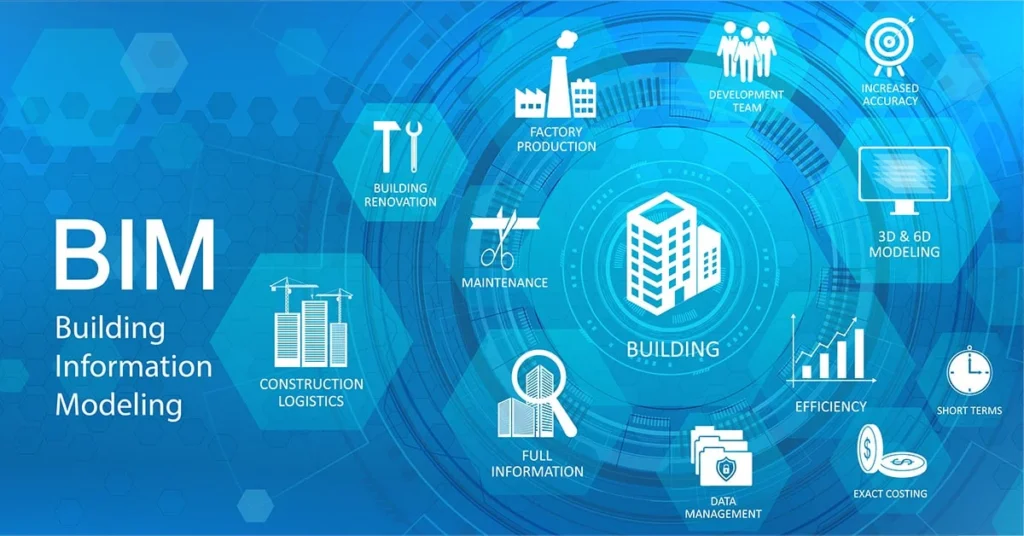
At its core, BIM is a sophisticated process that involves the creation and management of digital representations of physical and functional characteristics of places. These digital models serve as comprehensive repositories of information throughout the entire lifecycle of a building – from its conceptualization and design stages, through construction, operation, and maintenance, all the way to its eventual demolition or renovation.
Unlike traditional 2D drawings or blueprints, BIM models are richly detailed, three-dimensional virtual representations that contain a wealth of data pertaining to every aspect of a building project. This data encompasses not only geometric information such as dimensions, shapes, and spatial relationships, but also a wide range of non-graphical attributes such as material properties, cost estimates, energy performance, and maintenance schedules.
The Benefits of BIM
The adoption of BIM offers a multitude of benefits to stakeholders across the construction industry, revolutionizing workflows and improving efficiency in ways previously thought impossible. Some of the key advantages of BIM include:
- Enhanced Collaboration: BIM facilitates seamless collaboration and communication among architects, engineers, contractors, and other project stakeholders. By centralizing project data in a shared digital environment, BIM fosters interdisciplinary coordination and reduces the likelihood of errors or conflicts during construction.
- Improved Design Accuracy: With BIM, designers can create highly accurate and detailed virtual models of buildings, enabling them to visualize complex spatial relationships and identify potential design flaws before construction begins. This helps minimize costly rework and ensures that projects are completed on time and within budget.
- Cost and Time Savings: By streamlining workflows and optimizing construction processes, BIM can lead to significant cost and time savings over the course of a project. Through the use of advanced scheduling and simulation tools, contractors can identify opportunities for efficiency improvements and optimize resource allocation, resulting in faster project delivery and reduced construction costs.
- Sustainability and Environmental Impact: BIM enables designers to evaluate the environmental performance of buildings and make informed decisions regarding materials, energy usage, and environmental impact. By analyzing factors such as daylighting, thermal performance, and energy consumption, BIM helps minimize the carbon footprint of buildings and promote sustainable design practices.
- Facility Management and Lifecycle Maintenance: Beyond the construction phase, BIM continues to deliver value by providing facility managers with comprehensive digital models that can be utilized for building maintenance, renovation, and asset management. By integrating maintenance schedules, equipment specifications, and warranty information into the BIM model, facility managers can optimize the lifecycle performance of buildings and reduce operational costs.
Challenges and Future Outlook
Despite its numerous benefits, the widespread adoption of BIM has been hindered by various challenges, including interoperability issues, high upfront costs, and resistance to change within the industry. Additionally, the complexity of BIM software and the steep learning curve associated with its implementation have posed significant barriers to entry for smaller firms and individual practitioners.
However, as technology continues to advance and industry standards evolve, these challenges are gradually being overcome, paving the way for broader adoption of BIM across the construction sector. Moreover, the emergence of cloud-based BIM platforms and the integration of artificial intelligence and machine learning capabilities promise to further enhance the capabilities of BIM and drive innovation in the years to come.
In conclusion, Building Information Modeling represents a paradigm shift in the way buildings are designed, constructed, and managed. By harnessing the power of digital technology to create comprehensive virtual representations of buildings, BIM is revolutionizing the construction industry and shaping the future of architecture and engineering. As the benefits of BIM become increasingly evident, its adoption is poised to become not just a competitive advantage, but a necessity for firms seeking to thrive in the digital age.
The Evolution of BIM
To understand the significance of Building Information Modeling (BIM) and its impact on the construction industry, it’s essential to explore its evolution over time. BIM didn’t emerge overnight but rather evolved gradually, driven by technological advancements and the changing needs of the AEC sector.
Early Origins
The concept of BIM can be traced back to the early days of computer-aided design (CAD) in the 1960s and 1970s. During this period, architects and engineers began to explore the possibilities of using computers to create digital representations of building designs. However, these early CAD systems were limited in their capabilities and primarily focused on two-dimensional drafting.
It wasn’t until the 1980s and 1990s that the idea of building information modeling began to take shape. Innovations in computer graphics and software development paved the way for the creation of three-dimensional modeling tools that allowed architects and engineers to create more realistic digital representations of buildings. These early BIM systems were still rudimentary compared to modern standards, but they laid the foundation for future advancements in the field.
Mainstream Adoption
The real breakthrough for BIM came in the early 2000s when several influential projects demonstrated its potential to revolutionize the construction industry. One such project was the construction of the Sydney Opera House in Australia, where BIM was used to coordinate the complex geometry of the building’s iconic sail-like structures. Another notable example was the construction of Terminal 5 at Heathrow Airport in London, where BIM was employed to manage the vast amount of information associated with the project.
These early success stories helped to popularize BIM within the AEC sector and paved the way for its mainstream adoption. As awareness of BIM grew, industry organizations and government agencies began to recognize its potential to improve productivity, reduce costs, and enhance collaboration throughout the construction process.
Standardization and Interoperability
One of the key challenges facing the widespread adoption of BIM has been the lack of standardization and interoperability among different software platforms. In the early days of BIM, each software vendor developed its own proprietary file formats and data structures, making it difficult for project stakeholders to exchange information seamlessly.
To address this challenge, industry organizations such as the International Organization for Standardization (ISO) and the American Institute of Architects (AIA) have developed standards and guidelines for BIM implementation. These standards define common data formats, naming conventions, and data exchange protocols, enabling different software platforms to communicate with each other more effectively.
Additionally, the emergence of openBIM initiatives such as the Industry Foundation Classes (IFC) has further promoted interoperability by providing a neutral file format for exchanging BIM data between different software applications. By adhering to openBIM standards, project stakeholders can collaborate more efficiently and avoid the pitfalls of vendor lock-in.
Recent Advances
In recent years, BIM has continued to evolve with the advent of new technologies such as cloud computing, artificial intelligence, and augmented reality. Cloud-based BIM platforms offer enhanced collaboration and data accessibility, allowing project stakeholders to access and update BIM models from anywhere with an internet connection.
Artificial intelligence and machine learning algorithms are being integrated into BIM software to automate repetitive tasks, analyze complex data sets, and generate insights to support decision-making throughout the construction process. For example, AI-powered algorithms can analyze building performance data to optimize energy efficiency, identify potential safety hazards, and predict maintenance requirements.
Augmented reality (AR) technology is also being leveraged to enhance the visualization and communication of BIM models on construction sites. By overlaying digital information onto the physical environment, AR enables project stakeholders to visualize how building components will fit together in the real world and identify potential clashes or conflicts before they occur.
The Future of BIM
Looking ahead, the future of BIM appears promising, with continued advancements in technology and growing demand for digital transformation within the construction industry. As the benefits of BIM become increasingly evident, its adoption is expected to become more widespread, extending beyond large-scale projects to smaller firms and individual practitioners.
However, several challenges still need to be addressed to unlock the full potential of BIM and ensure its widespread adoption. These include addressing interoperability issues, overcoming resistance to change within the industry, and providing training and support to help stakeholders navigate the complexities of BIM implementation.
Moreover, as BIM continues to evolve, it is likely to become more integrated with other emerging technologies such as the Internet of Things (IoT), robotics, and blockchain. By leveraging the synergies between these technologies, BIM has the potential to further enhance collaboration, improve efficiency, and drive innovation across the entire construction ecosystem.
In conclusion, Building Information Modeling represents a transformative force that is reshaping the construction industry in profound ways. From its humble beginnings as a tool for creating digital representations of buildings, BIM has evolved into a comprehensive process that encompasses the entire lifecycle of a building – from design and construction to operation and maintenance. As technology continues to advance and industry standards evolve, BIM is poised to become not just a competitive advantage, but a fundamental requirement for firms seeking to thrive in the digital age.
